Apple macOS 10.13.5 EFI update, CVE-2018-4251

https://support.apple.com/en-us/HT208849

https://cve.mitre.org/cgi-bin/cvename.cgi?name=CVE-2018-4251


CrowdSupply: SPIDriver: A better SPI adapter

https://twitter.com/HacksterPro/status/1002007748807184389

https://www.crowdsupply.com/excamera/spidriver

SPIDriver is an easy-to-use tool for controlling SPI devices. It works with Windows, Mac and Linux, and has a built in color screen that shows a live logic-analyzer display of all SPI traffic. It uses a standard FTDI USB serial chip to talk to the PC, so no special drivers need to be installed. The board includes 3.3 and 5V supplies with voltage and current monitoring.

Asian Hardware Oriented Security and Trust Symposium (AsianHOST)

Hardware has long been viewed as a trusted party supporting the whole computer system and is often treated as an abstract layer running instructions passed through the software layer. Historically, cybersecurity community believed that the integrated circuit (IC) supply chain is well protected. However, the IC supply chain, which is now spread around the globe, has become more vulnerable to attacks than before. The heavy reliance on third-party resources/services breeds security concerns and invalidates the illusion that attackers cannot easily access the isolated IC supply chain. Formal methods have been proven to be effective in security verification on hardware code. Trustworthy hardware is also under development for the construction of the root-of-trust. The intrinsic properties of existing and emerging devices, MOSFET, memristor, spintronics, etc. are leveraged for security primitives and applications. Another trend in the hardware security area is the development of security enhanced hardware infrastructure for system level protection. The goal is to provide a fully operational software and hardware platform that ensures secure design, manufacturing, and deployment of modern computer systems.

Asian Hardware Oriented Security and Trust Symposium (AsianHOST) aims to facilitate the rapid growth of hardware security research and development in Asia and South Pacific areas. AsianHOST highlights new results in the area of hardware and system security. Relevant research topics include techniques, tools, design/test methods, architectures, circuits, and applications of secure hardware. AsianHOST 2017 invites original contributions related to, but not limited by, the following topics.

http://asianhost.org/2018/authors.htm#cfp


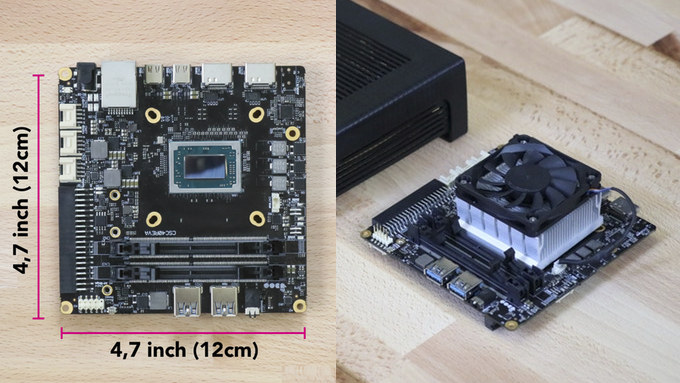
UDOO BOLT AMD Ryzen Embedded V1000 SBC

https://www.cnx-software.com/2018/06/01/udoo-bolt-amd-ryzen-embedded-v1000-sbc/

https://www.cnx-software.com/wp-content/uploads/2018/06/UDOO-BOLT.jpg


DMTF releases SMBIOS 3.2

Version 3.2 of SMBIOS adds support for current technologies, including USB Type-C, PCIe bifurcation and new processors. In addition, the standard extends support for NVDIMMs and adds support for logical memory type.

https://www.dmtf.org/content/dmtf-releases-smbios-32

https://www.dmtf.org/standards/smbios

Click to access DSP0134_3.2.0.pdf

Inside Microsoft’s Azure Sphere hardware for secure IoT

Simon BIsson of InfoWorld has an article on Microsoft Azure Sphere, about various security components, and a bit on Sphere OS, their Linux distro.

https://www.infoworld.com/article/3276607/internet-of-things/inside-microsofts-azure-sphere-hardware-for-secure-iot.html#tk.twt_ifw

Demystifying Android Physical Acquisition

Demystifying Android Physical Acquisition
May 29th, 2018 by Oleg Afonin

Numerous vendors advertise many types of solutions for extracting evidence from Android devices. The companies claim to support tens of thousands of models, creating the impression that most (if not all) Android devices can be successfully acquired using one method or another. On the other side of this coin is encryption. Each Google-certified Android device released with Android 6.0 or later must be fully encrypted by the time the user completes the initial setup. There is no user-accessible option to decrypt the device or to otherwise skip the encryption. While this Google’s policy initially caused concerns among the users and OEM’s, today the strategy paid out with the majority of Android handsets being already encrypted. So how do the suppliers of forensic software overcome encryption, and can they actually extract anything from an encrypted Android smartphone locked with an unknown passcode? We did our own research. Bear with us to find out![…]

https://blog.elcomsoft.com/2018/05/demystifying-android-physical-acquisition/

pmem.io: Intel persistent memory

Re: https://firmwaresecurity.com/2018/04/11/intel-persistent-memory/ and https://firmwaresecurity.com/2018/05/10/intel-adds-python-bindings-to-persistent-memory-sdk/

https://twitter.com/daniel_bilar/status/1002250766357278720

https://newsroom.intel.com/editorials/re-architecting-data-center-memory-storage-hierarchy/

http://pmem.io/

DHS’ S&T Directorate Selects Four Firms for Device Firmware Security Research

https://www.dhs.gov/science-and-technology/news/2018/05/30/news-release-st-announces-four-sbir-awards-secure-mobile

Kryptowire LLC, Fairfax, Va., SAFARI: Scalable Analysis of Firmware for AndRoid and iOS—Kryptowire was awarded $149,993 to determine the feasibility of a scalable, comprehensive and automated framework to detect firmware-borne threats—malicious and unintentionally insecure—in Android and iOS devices. The framework will encompass three analysis techniques: forced-path execution, static analysis and dynamic analysis across multiple software modules and applications to provide analysis of device firmware across different vendors, operating systems and applications.

RAM Laboratories, Inc., San Diego, California, Automated & Scalable Analysis of Mobile & IoT Device Firmware—RAM Laboratories was awarded $150,000 to prove its concept for Firmalytics, a modular and scalable framework that will automatically analyze firmware for security vulnerabilities, backdoors and malware. As envisioned, the framework also will add the analysis results to a database to support a correlation engine to be used for identifying groups of similar firmware vulnerabilities.

Red Balloon Security, New York, New York, Firmware Automated Analysis at Scale with Testing—Red Balloon was awarded $149,869 to test its proposed Firmware Automated Analysis at Scale with Testing (FAAST) technology. FAAST will be built on top of the company’s Firmware Reverse Analysis Konsole (FRAK) unpacker for unpacking, analyzing, modifying and packaging firmware images. The goal of the project is to demonstrate feasibility of the mobile and embedded firmware analysis automation technology platform.

Sekurity LLC, Jersey City, New Jersey, Principled Security Analysis of the Firmware Binaries via Guaranteed Formal Verification and Scalable Dynamic Monitoring—Sekurity was awarded $149,999 to test the feasibility of its proposed firmware binary security analysis framework (BINNSEC) for mobile and IoT devices. To ensure scalability and usability across different firmware binary formats, BINNSEC will use a combination of advanced binary reverse engineering, malware analysis, programming languages techniques, formal methods and dynamic vulnerability assessment algorithms to generate accurate and human-perceivable reports in a timely manner.

https://redballoonsecurity.com/

Home

Home Test

If you can find the web site for Sekurity LLC, please leave a Comment on this blog with an URL.

Practical DMA attack on Windows 10

Practical DMA attack on Windows 10
Written by Jean-Christophe Delaunay · 2018-05-30 · in Pentest

Among the various security assessments performed by Synacktiv, some involve attacking the security hardening of a laptop or workstation master image that will be massively deployed in an infrastructure. The purpose of this kind of security assessment is to give the client an overview of its level of maturity regarding security concerns and provide him with some recommendations in order to increase his level of security. This post describes how Synacktiv defeated a workstation security measures by using a hardware approach.[…]

https://www.synacktiv.com/posts/pentest/practical-dma-attack-on-windows-10.html

Example photo of Evil Maid attacker in their lab: 🙂

auditor


Zerocat Chipflasher

Zercat is selling Chipflasher “board-edition-1”, which has earned the Free Software Foundation’s Respects Your Freedom (RYF) certification.

[…]Let’s create trustworthy hardware on our own, the free-design Propeller microchip empowers us to do so! When it comes to flash a coreboot or libreboot laptop, we are now using Zerocat’s free-design chipflasher as part of a quite clean & free toolchain. Commonly used flashers like the Beagle Bone Black or Raspberry Pi with chips of a proprietary design can now be avoided. The Zerocat Chipflasher is meant as a Do-It-Yourself project (DIY). It is easy to build and easy to use. For SMD packed chips, you may use a test clip.[…]

https://www.fsf.org/news/zerocat-chipflasher-board-edition-1-now-fsf-certified-to-respect-your-freedom

http://www.zerocat.org/chipflasher-board-edition-1.html

http://www.zerocat.org/shop-en.html

Flash your Libre Firmware with a Libre Programmer

Flashing a Gigabyte GA-G41M-ES2L Desktop Board

Hardware security talks on the rise…

It looks like hardware/firmware security submissions to security conferences are on a rise:

https://twitter.com/savagejen/status/1001595209766113280

https://www.blackhat.com/us-18/briefings/schedule/#track/hardwareembedded