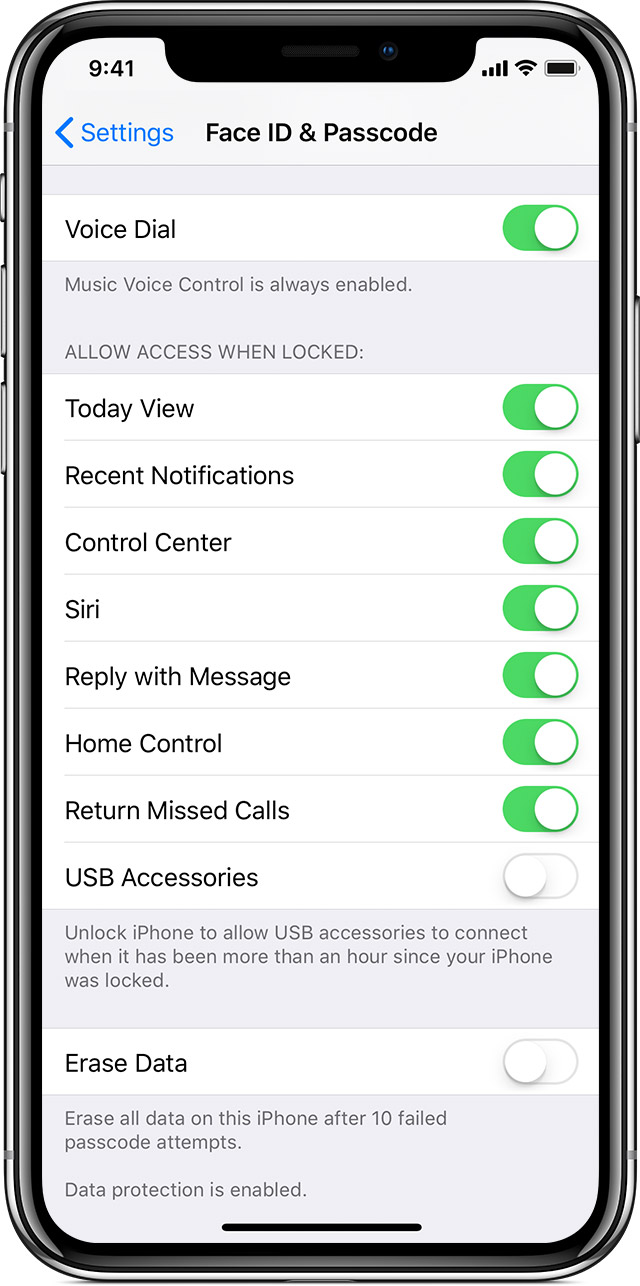
Apple macOS 10.13.6: UEFI SecureBoot support for iMac Pro

Re: https://firmwaresecurity.com/2017/12/13/apple-secure-boot/ and https://firmwaresecurity.com/2017/12/20/apple-kb-article-on-secure-boot/

there is more info on Apple Secure Boot:

https://support.apple.com/en-us/HT208864
https://support.apple.com/en-us/HT208937

GCC: Mitigation against unsafe data speculation (CVE-2017-5753)

The patches I posted earlier this year for mitigating against
CVE-2017-5753 (Spectre variant 1) attracted some useful feedback, from
which it became obvious that a rethink was needed. This mail, and the
following patches attempt to address that feedback and present a new
approach to mitigating against this form of attack surface.[…]

https://gcc.gnu.org/ml/gcc-patches/2018-07/msg00423.html


INTEL-SA-00127: Intel Direct Connect Interface (DCI) policy update

https://www.intel.com/content/www/us/en/security-center/advisory/intel-sa-00127.html

Existing UEFI setting restrictions for DCI (Direct Connect Interface) in 5th and 6th generation Intel® Xeon® Processor E3 Family, Intel® Xeon® Scalable processors, and Intel® Xeon® Processor D Family can potentially allow a limited physical presence attacker to access platform secrets via debug interfaces.

CVE-2017-3197: GIGABYTE UEFI security problems

What’s this? No more info, but it almost looks like someone at MITRE ran CHIPSEC against a GIGABYTE box and found some failures, so assigned a CVE. Too bad MITRE doesn’t have boxes from ALL OEMs. Maybe this is something more than simple CHIPSEC failures, but the CVE omits details…

GIGABYTE BRIX UEFI firmware for the GB-BSi7H-6500 (version F6) and GB-BXi7-5775 (version F2) platforms does not securely implement BIOSWE, BLE, SMM_BWP, and PRx features. As a result, the BIOS is not protected from arbitrary write access and may permit modifications to the SPI flash.


https://nvd.nist.gov/vuln/detail/CVE-2017-3197

The Unbearable Lightness of BMC’s

https://twitter.com/nicowaisman/status/1004367132854050816

https://www.blackhat.com/us-18/briefings/schedule/#the-unbearable-lightness-of-bmcs-10035


Memory Systems and Memory-Centric Computing Systems

The memory system is a fundamental performance and energy bottleneck in almost all computing systems. Recent system design, application, and technology trends that require more capacity, bandwidth, efficiency, and predictability out of the memory system make it an even more important system bottleneck. At the same time, DRAM and flash technologies are experiencing difficult technology scaling challenges that make the maintenance and enhancement of their capacity, energy efficiency, performance, and reliability significantly more costly with conventional techniques. In fact, recent reliability issues with DRAM, such as the RowHammer problem, are already threatening system security and predictability. We are at the challenging intersection where issues in memory reliability and performance are tightly coupled with not only system cost and energy efficiency but also system security. In this course, we first discuss major challenges facing modern memory systems (and the computing platforms we currently design around the memory system) in the presence of greatly increasing demand for data and its fast analysis. We then examine some promising research and design directions to overcome these challenges. We discuss at least three key topics in detail, focusing on both open problems and potential solution directions: 1) fundamental issues in memory reliability and security and how to enable fundamentally secure, reliable, safe architectures; 2) enabling data-centric and hence fundamentally energy-efficient architectures that are capable of performing computation near data; 3) reducing both latency and energy consumption by tackling the fixed-latency/energy mindset. If time permits, we will also discuss research challenges and opportunities in enabling emerging NVM (non-volatile memory) technologies and scaling NAND flash memory and SSDs (solid state drives) into the future.

https://people.inf.ethz.ch/omutlu/acaces2018.html

 

Noriben Malware Analysis Sandbox

Noriben is a Python-based script that works in conjunction with Sysinternals Procmon to automatically collect, analyze, and report on runtime indicators of malware. In a nutshell, it allows you to run your malware, hit a keypress, and get a simple text report of the sample’s activities. Noriben allows you to not only run malware similar to a sandbox, but to also log system-wide events while you manually run malware in ways particular to making it run. For example, it can listen as you run malware that requires varying command line options, or user interaction. Or, to watch the system as you step through malware in a debugger.

https://github.com/Rurik/Noriben

ARM v8.4A spec: online HTML as well as PDF

https://twitter.com/maver/status/1014501893043834881

https://developer.arm.com/products/architecture/a-profile/docs/ddi0596/latest/a64-base-instructions-alphabetic-order/adc

https://developer.arm.com/products/architecture/a-profile

ACM SIGArch: Speculating about speculation: on the (lack of) security guarantees of Spectre-V1 mitigations

Spectre and Meltdown opened the Pandora box of a new class of speculative execution attacks that defeat standard memory protection mechanisms. These attacks are not theoretical, they pose a real and immediate security threat, and have been reportedly exploited by cybercriminals.[…]

Speculating about speculation: on the (lack of) security guarantees of Spectre-V1 mitigations